

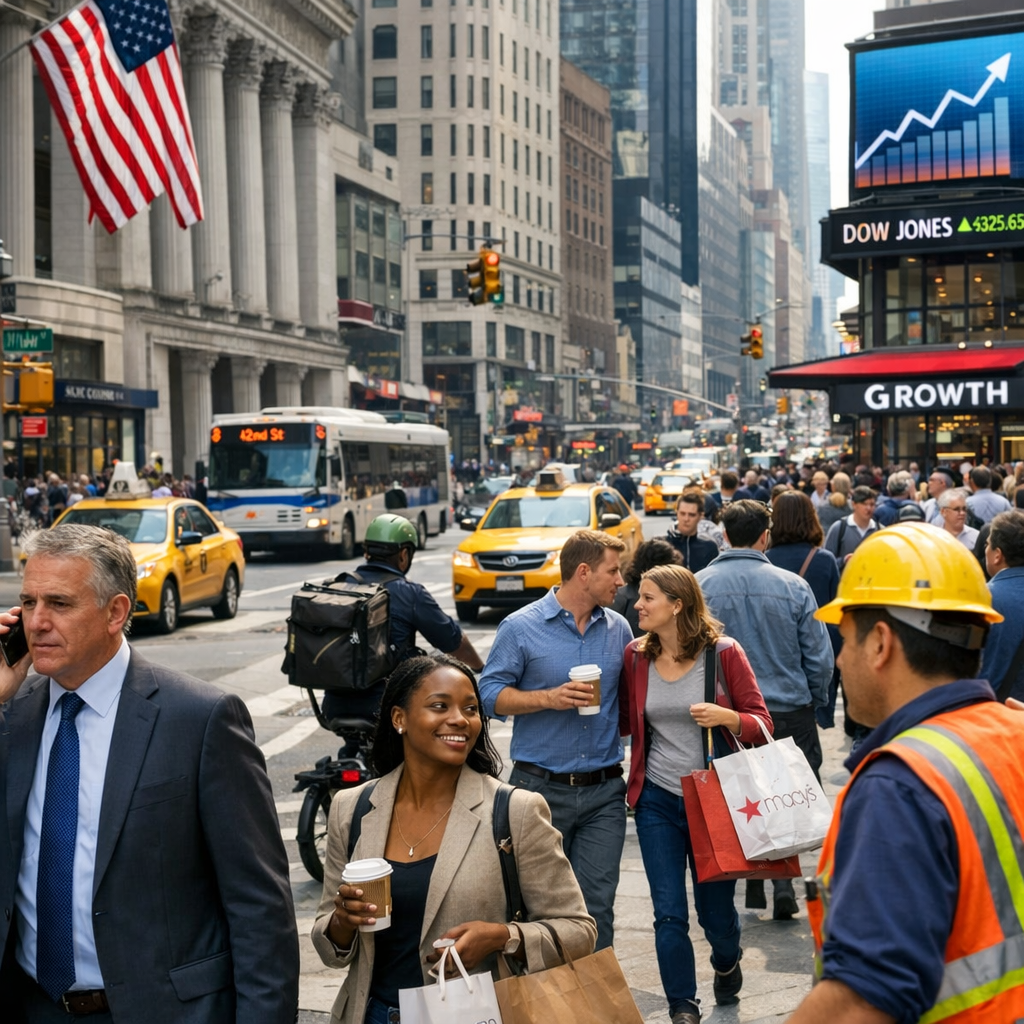
The United States economy has demonstrated resilience and adaptability in recent times, navigating through various challenges and capitalizing on emerging opportunities. This article provides an overview of the current economic landscape, focusing on growth sectors and prevailing challenges.
Economic Growth and Employment
In the first quarter of 2026, the U.S. economy expanded at an annualized rate of 2%, rebounding from a sluggish 0.5% growth in the previous quarter. This recovery was largely attributed to increased federal spending following a 43-day government shutdown and robust investments in the artificial intelligence (AI) sector. Notably, the AI industry has continued to exhibit strong growth, contributing significantly to the overall economic performance. Source
Employment figures have also shown positive trends. In April 2026, the economy added 115,000 jobs, surpassing economists’ expectations. The health care sector led this growth, adding 37,000 new positions. Despite global challenges, such as energy shocks from international conflicts and AI-driven layoffs, the labor market has remained stable, with the unemployment rate holding steady at 4.3%. Source
Inflation and Consumer Spending
Inflation has been a concern, particularly following geopolitical events that have impacted energy prices. In March 2026, inflation surged due to an energy shock stemming from the onset of the Iran conflict, raising concerns among Federal Reserve officials. Despite these inflationary pressures, broader economic indicators have shown resilience, with consumer spending and business investment remaining robust. Source
Political Landscape and Economic Policy
The U.S. political environment continues to influence economic policy and performance. The two major political parties, the Democratic Party and the Republican Party, often have differing approaches to economic management, affecting decisions on taxation, spending, and regulation. Understanding these dynamics is crucial for comprehending the broader economic context. Source
Conclusion
While the U.S. economy faces challenges such as inflationary pressures and geopolitical uncertainties, it continues to demonstrate resilience. Key sectors like health care and technology are driving growth, and the labor market remains stable. Staying informed about these developments is essential for understanding the nation’s economic trajectory.