

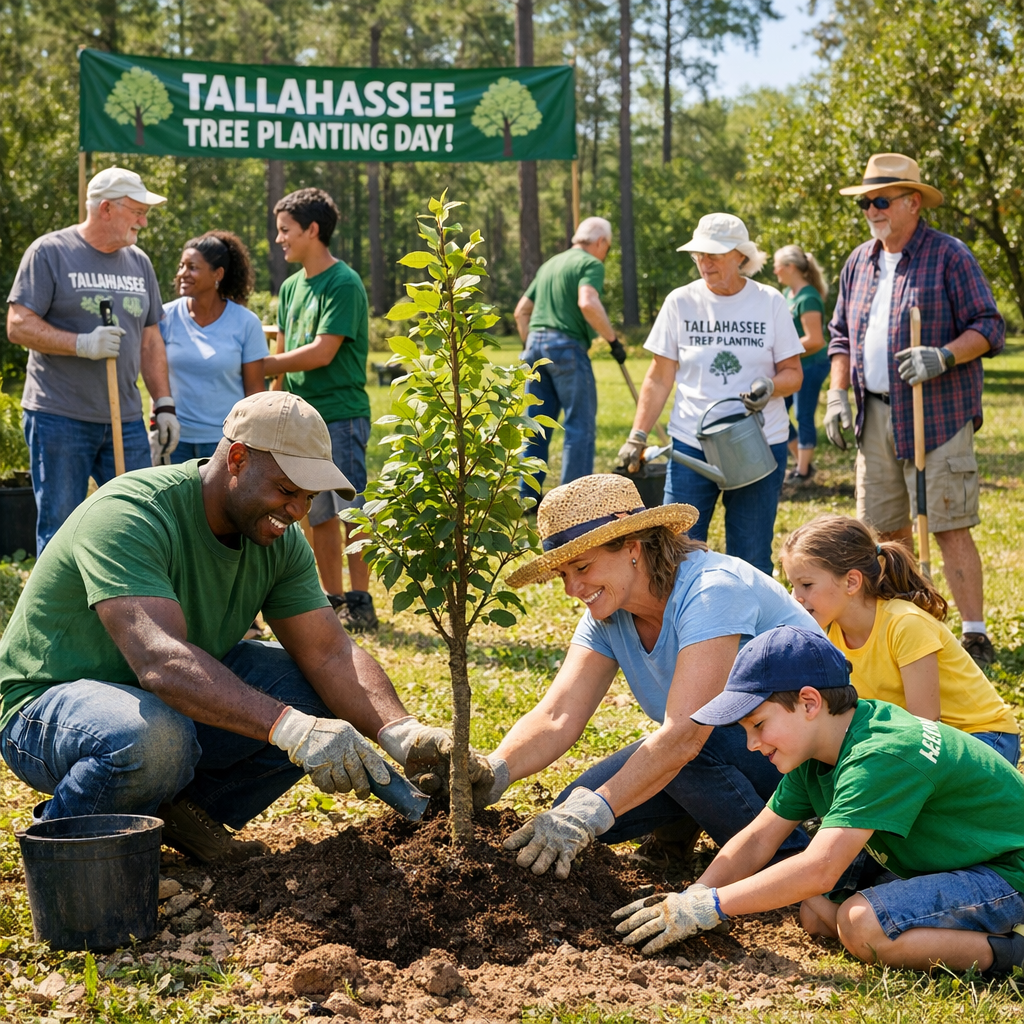
Tallahassee, Florida, is renowned for its rich natural landscapes and commitment to environmental stewardship. The city’s proactive approach to sustainability and conservation is evident through various initiatives and community collaborations.
City-Led Environmental Programs
The City of Tallahassee has implemented several programs aimed at preserving natural resources and promoting sustainability. The Environmental Management division, in partnership with the Florida Fish and Wildlife Conservation Commission, focuses on controlling invasive plant species in multiple city parks. This effort enhances native plant growth and restores natural ecosystems, benefiting local wildlife. Parks involved include Elinor Klapp-Phipps Park, Lafayette Heritage Trail Park, and Tom Brown Park, among others.
Additionally, the city’s Brownfields program has successfully transformed underutilized, environmentally impacted sites into thriving community assets. Notably, the redevelopment of a former polluted site into Cascades Park has spurred significant private investment and revitalized the area.
Community Engagement and Advocacy
Local organizations play a crucial role in Tallahassee’s environmental efforts. The Tallahassee Region Environmental Group (TREG) focuses on water quality issues within the region. One of their key projects involves conducting water sampling in Lake Munson to identify sources of nutrients and toxic contaminants, aiming to protect the flow toward Wakulla Springs.
The League of Women Voters of Tallahassee also contributes to environmental advocacy by supporting energy conservation, renewable energy sources, and the protection of freshwater resources. Their Natural Resources and Clean Energy Committee actively engages in projects such as neighborhood cleanups and educational initiatives.
Conservation and Recreation
Elinor Klapp-Phipps Park serves as a prime example of balancing conservation with public recreation. Managed cooperatively by the Northwest Florida Water Management District and the City of Tallahassee, the park offers over 10 miles of multi-use trails and seven miles of hiking trails. These areas provide opportunities for picnicking, hiking, biking, horseback riding, and wildlife viewing, all while protecting the water and natural resources of the area.
Looking Ahead
While Tallahassee has made significant strides in environmental conservation, challenges remain. The city’s Clean Energy Plan aims to achieve 100% net clean energy by 2050. However, recent assessments suggest that current efforts may need to be intensified to meet this ambitious goal. Community involvement and continued advocacy are essential to drive progress and ensure a sustainable future for Tallahassee.
Through collaborative efforts between city officials, local organizations, and residents, Tallahassee continues to demonstrate a strong commitment to environmental stewardship and sustainability.